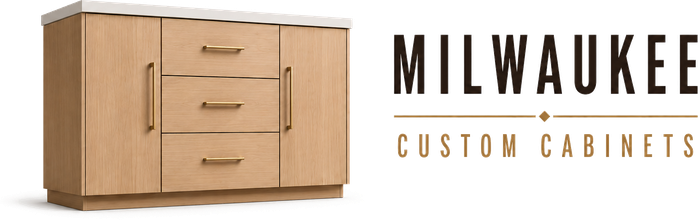
Changing-Table Built-Ins
Keeps diapers, clothing, wipes, and care supplies within reach of the changing surface so daily routines stay organized and safer.

Milwaukee Custom Cabinets builds nursery and kids' room built-ins for Milwaukee-area families who want storage that can evolve as a child grows. We design for bedrooms, nurseries, playrooms, and shared spaces where safety and easy access matter as much as appearance.
The strongest projects avoid locking the room into one short age window. Adjustable shelves, durable fronts, flexible wardrobes, and built-in reading or toy zones can stay useful as the room changes.
Get a Free Quote
Tell us about your custom nursery & kids' room built-ins project and we'll schedule a free in-home consultation.
We choose the cabinet configurations that make sense for safe, flexible storage that can change with the child. These are starting points, not limits on what can be fabricated.
Keeps diapers, clothing, wipes, and care supplies within reach of the changing surface so daily routines stay organized and safer.
Consolidates files, supplies, and equipment into built-in storage so work areas stay clearer and easier to manage.
Combines a comfortable reading perch with drawers or cabinets below for books, toys, or extra bedding.
Pairs a study surface with clothing storage so a child’s room can adapt as school needs grow.
Keeps toys visible enough for children to use while making cleanup simple enough to become part of the routine.
Combines drawers, hanging storage, and a changing surface so infant care and clothing stay together as the child grows.
Accessories are useful only when they remove friction from safe, flexible storage that can change with the child. We select them around the routine instead of filling the cabinet with gadgets.
Reduces slamming and wear by slowing doors or drawers before they close.
Lets shelf heights change as the contents of nursery and kids-room storage change, preventing one fixed spacing pattern from wasting vertical room.
Keeps books and small toys at a child-friendly height so choosing and returning items feels intuitive.
Keeps dirty laundry concealed and separated so sorting is built into the room rather than handled with loose baskets.
Keeps devices and cords contained inside nursery and kids-room storage, giving phones or tablets one place to charge without occupying the visible counter or bench.
Lets bin positions or sizes change as toys become books, school supplies, or hobby storage over time.
Door and drawer construction changes both the look and the way nursery and kids-room built-ins is accessed. We coordinate fronts, hardware, clearances, and the surrounding architecture together.
Creates a clean, low-detail face that works well when you want cabinetry to feel more contemporary and visually quiet.
Uses a simple frame-and-panel profile that works across transitional, traditional, and many updated contemporary interiors.
Provides simple open storage for baskets, shoes, books, or toys that children can use without opening a door.
Provides safer enclosed display storage in children’s rooms without introducing breakable glass panels.
Builds the grip into the door or drawer edge for a cleaner look without separate hardware.
Uses a familiar framed door style with soft-close operation, making children’s cabinetry feel residential while reducing slamming.
Materials and finishes are chosen for the conditions this nursery and kids-room built-ins will face, then balanced against the character of the room. Durability and maintenance matter as much as color.
Creates a smooth painted surface for nursery and kids-room storage, giving the built-in a clean, consistent color without relying on prominent wood grain.
Provides a strong, dimensionally stable cabinet-box material that holds hardware well and performs reliably in custom construction.
Adds warm natural grain to selected parts of nursery and kids-room storage, creating contrast without turning every cabinet surface into a wood focal point.
Uses lower-emitting finish options where families want to reduce strong coating odors in bedrooms or children’s spaces.
Combines a durable painted cabinet surface with lower-emitting coating choices for bedrooms and play spaces.
Brings warm visible grain to nursery and kids-room storage, giving the built-in natural texture without needing ornate door profiles or heavy decorative trim.
The same nursery and kids-room built-ins can support very different interiors. We use style as a direction for proportion, detailing, and finish rather than a fixed package.
Uses cleaner lines, simpler fronts, and restrained hardware so the cabinetry feels integrated rather than visually heavy.
Uses durable cabinetry in brighter color zones to make children’s storage easier to recognize and more fun to use.
Uses more defined profiles, furniture details, and richer material character for a cabinetry style with a stronger sense of tradition.
Combines a homework desk with books, display, and closed storage for older children who need less toy space and more study space.
Uses simple cabinetry with controlled pops of color so the room feels energetic without relying on themed furniture.
Uses simple profiles and restrained colors so built-ins can transition from nursery storage to an older child’s room.
Kids-room cabinetry should solve today’s clutter without locking the room into one short stage of childhood. We plan books, toys, clothing, diapers or changing supplies, keepsakes, display shelves, art materials, and later school storage so the built-ins can keep working as the child grows.
Safety and reach matter just as much as capacity. We coordinate anchored cabinetry, rounded or protected edges where appropriate, child-reachable open storage, adult-height closed storage, durable finishes, hardware, and charging so the room is easy for a child to use without putting everything within reach.
We also show material and finish choices before the full project is committed. Parents, growing families, toddlers, school-age children, and teens should be able to evaluate grain, color, sheen, hardware feel, and storage details in context rather than choosing from a tiny online swatch. The result is cabinetry that is easier to use on day one and easier to live with years later.
Children’s storage changes quickly as clothing, toys, books, schoolwork, and room use evolve. We plan the cabinetry for the child’s current stage while leaving enough adjustability to keep it useful as they grow.
We look at clothing, diapers or changing needs, toys, books, art supplies, collections, and the places clutter currently accumulates.
Frequently used child-access storage can stay low while less-used, fragile, or parent-controlled items are placed higher or behind doors.
Adjustable shelves, removable inserts, convertible desk areas, wardrobes, window seats, and book storage are planned so the room can change without rebuilding everything.
Rounded edges where appropriate, secure anchoring, robust drawer hardware, washable finishes, and practical pulls are prioritized for hard everyday use.
Cabinetry is secured and adjusted on site, then checked for stable anchoring, usable clearances, door and drawer operation, and the way a child will actually reach it.
By 2026, Architectural Digest was highlighting a move away from generic beige children’s rooms toward more personality-driven spaces that can support play, reading, creativity, and changing interests.
For cabinetry, the longer-lasting idea is flexibility: low-access toy storage can later become books, school supplies, hobbies, or display as the child grows.
Rounded edges, anchored construction, easy-to-operate hardware, and a mix of open and closed storage matter more than chasing a short-lived themed look.
We plan built-ins so the room can mature through nursery, elementary, and teen years without requiring the entire cabinet system to be replaced.
Adjustable shelving, neutral cabinet fronts, removable changing tops, flexible drawers, and open book or toy storage can shift from baby supplies to clothing, books, homework, and hobbies without rebuilding the whole wall.
Open bins and low shelves make everyday toys easier for children to put away; closed doors and drawers hide visual clutter and protect less-used items. A combination usually works best.
Yes. A properly sized counter or dresser-height cabinet can provide diaper and clothing storage below, then convert to ordinary storage once a changing surface is no longer needed.
Permanent cabinetry should be securely fastened, and the layout can avoid unstable freestanding pieces, sharp projections, and hardware that catches clothing. Specific child-safety needs should be discussed during design.
Yes. A charging drawer or upper cabinet can keep devices and cords in a controlled location, with electrical access coordinated before fabrication.
Durable painted maple or HDF, natural white oak accents, washable low-sheen finishes, and sturdy hardware are practical because they can be cleaned without making the room feel utilitarian.
Yes. Low book storage, a cushioned window seat, drawers below, and display ledges can create a reading zone while using wall space that might otherwise stay empty.
Yes. The permanent millwork can use the same door profiles, wood species, paint colors, and trim language as the home, while color and personality come from hardware, cushions, art, and removable accessories.
Call Milwaukee Custom Cabinets to discuss your custom nursery and kids room built-ins project and the next step for your space.
Call 414-667-5102 Now →