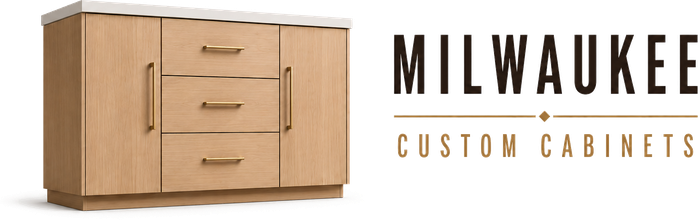
Grill & Smoker Base Cabinets
Builds storage around the grill or smoker while preserving the ventilation and service clearances the appliance requires.

Milwaukee Custom Cabinets designs outdoor kitchen cabinetry for homeowners across greater Milwaukee who want storage and work surfaces that belong outdoors from the start. These projects are planned around Wisconsin weather, covered or uncovered exposure, and the actual cooking equipment being installed.
Outdoor cabinetry is not simply indoor cabinetry moved to a patio. Material selection, ventilation, drainage, heat clearances, and service access all need to be resolved before fabrication.
Get a Free Quote
Tell us about your custom outdoor kitchen cabinetry project and we'll schedule a free in-home consultation.
We choose the cabinet configurations that make sense for outdoor cooking, serving, and weather exposure. These are starting points, not limits on what can be fabricated.
Builds storage around the grill or smoker while preserving the ventilation and service clearances the appliance requires.
Keeps water, prep tools, and cleanup supplies outside so you spend less time carrying items back into the house.
Integrates cold storage into the outdoor run while allowing proper airflow and service access.
Creates durable outdoor storage and serving space that can stay functional through Milwaukee weather.
Supports the oven at a practical working height with nearby storage for peels, fuel, trays, and serving tools.
Adds beverage storage and a serving zone beside the outdoor kitchen so guests can gather without crowding the cook.
Accessories are useful only when they remove friction from outdoor cooking, serving, and weather exposure. We select them around the routine instead of filling the cabinet with gadgets.
Lets heat and gas-related components breathe instead of trapping them inside a sealed cabinet cavity.
Keeps outdoor waste concealed beside the prep area so cleanup does not require a separate freestanding bin.
Provides a dedicated, ventilated location for a propane cylinder while keeping it out of the main work path.
Helps protect utensils and supplies from rain, humidity, and outdoor debris between uses.
Gives towels and grill cloths a dry, dedicated home near the sink and prep zone.
Keeps spatulas, tongs, thermometers, and serving tools close to the grill instead of carrying them in and out.
Door and drawer construction changes both the look and the way outdoor kitchen cabinetry is accessed. We coordinate fronts, hardware, clearances, and the surrounding architecture together.
Uses coated metal door fronts for strong weather resistance and a clean, manufactured outdoor-kitchen look.
Uses solid polymer fronts that resist swelling and do not depend on a wood core in exposed outdoor conditions.
Uses moisture-tolerant panel construction for doors and exposed faces where rain and humidity are expected.
Provides removable, vented access around outdoor appliances so heat can escape and service points remain reachable.
Provides airflow around built-in outdoor equipment where appliance or gas-installation requirements call for ventilated cabinet openings.
Builds the grip into the door or drawer edge for a cleaner look without separate hardware.
Materials and finishes are chosen for the conditions this outdoor kitchen cabinetry will face, then balanced against the character of the room. Durability and maintenance matter as much as color.
Provides a noncombustible, easy-clean cabinet material well suited around grills and other high-heat outdoor appliances.
Resists water, swelling, and rot, making it a low-maintenance cabinet material for exposed outdoor conditions.
Creates a thin, dense, moisture-resistant panel that works well where durability and easy cleaning matter.
Uses lightweight aluminum components with a durable coating that resists corrosion better than many interior-grade metals.
Uses a non-wood polymer cabinet material for areas where repeated wetting or wash-down is a major concern.
Provides a dense, weather-tolerant surface option for outdoor counters and panels exposed to heat, sun, and moisture.
The same outdoor kitchen cabinetry can support very different interiors. We use style as a direction for proportion, detailing, and finish rather than a fixed package.
Uses stainless cabinetry as the visual language of the entire kitchen for a crisp, professional outdoor cooking setup.
Uses cleaner lines, simpler fronts, and restrained hardware so the cabinetry feels integrated rather than visually heavy.
Uses durable finishes and open serving space to make an outdoor bar feel relaxed, social, and built for frequent entertaining.
Uses a simple, compact cabinet run with durable outdoor materials when you want function without a bulky built-in kitchen.
Balances familiar cabinet detailing with cleaner proportions, making it easy to bridge traditional architecture and updated interiors.
Prioritizes cold drinks, towel storage, and easy serving access close to the pool rather than a full cooking program.
Outdoor-kitchen cabinetry has to organize cooking and serving while living through temperature swings, moisture, sun, windblown debris, and seasonal shutdowns. We plan grill tools, cookware, trash, serving pieces, refrigeration, sinks, and dry storage around the appliance layout and the way people move between the house, grill, and seating area.
The enclosure materials and openings matter more outdoors than they do in a conditioned kitchen. We coordinate appliance cutouts, ventilation, gas or electrical access, drainage, countertop support, weather exposure, and service access so the cabinetry protects what it can without trapping heat or making equipment impossible to maintain.
We also show material and finish choices before the full project is committed. Homeowners building patios, covered porches, pool areas, and outdoor entertaining spaces should be able to evaluate grain, color, sheen, hardware feel, and storage details in context rather than choosing from a tiny online swatch. The result is cabinetry that is easier to use on day one and easier to live with years later.
Outdoor cabinetry has to work around weather, appliance heat, drainage, and seasonal exposure before style enters the conversation. We plan the cabinet system around the exact site and equipment instead of adapting indoor cabinetry afterward.
We review roof coverage, sun, wind-driven rain, slab conditions, drainage, freeze-thaw exposure, and how the cooking area connects to the house and entertaining space.
Grills, side burners, refrigerators, sinks, ice makers, trash, and gas or electrical clearances are confirmed before cabinet openings are built.
Cabinet substrates, doors, hardware, fasteners, and finishes are selected for the level of exposure and the maintenance the owner is willing to perform.
Openings, removable panels, ventilation paths, service access, and finished ends are built into the cabinet package rather than cut in later.
Cabinetry is set and secured with attention to water shedding, slab conditions, appliance access, and the expansion or contraction that comes with Milwaukee weather.
In July 2026, NKBA reported that outdoor kitchens and grills were the leading requested outdoor-living feature among professionals discussing current client demand.
The same industry discussion emphasized year-round function, layered lighting, multifunctional entertaining, and high-performance materials that can tolerate weather exposure.
For cabinetry in Wisconsin, that puts freeze-thaw cycles, rain, UV exposure, drainage, and appliance ventilation ahead of indoor-style finish trends.
Stainless steel, exterior-rated polymers, and other outdoor-suitable systems make more sense than simply carrying interior cabinet construction onto a patio.
Exterior-grade cabinet systems, stainless steel, durable compact or laminate-type exterior products where rated for the application, and other weather-suitable materials are better choices than ordinary interior cabinetry. The exact material should match how exposed the kitchen will be.
Often yes. Built-in cooking and refrigeration equipment can have manufacturer-required ventilation and clearance needs, and gas installations may require additional venting. Those requirements should be known before cabinet openings are fabricated.
The fixed cabinetry can be designed for year-round exterior exposure, but water lines, appliances, and accessories may require winterization or manufacturer-specific seasonal care. The design should leave service points accessible.
Weather-rated door systems, sloped or protected installation locations, sealed edges, drainage awareness, and suitable hardware help, but outdoor cabinetry should still be planned with the understanding that wind-driven moisture can reach exposed areas.
Yes, provided the appliance is suitable for built-in installation and its cutout, insulation, combustible clearances, ventilation, and service requirements are followed.
Grill tools, serving ware, cookware, trash, cleaning supplies, and items that can tolerate the environment are good candidates. Food, paper products, and moisture-sensitive items may be better stored indoors depending on exposure.
It can echo the indoor palette, but exterior materials and weather performance should take priority. Coordinating color, hardware tone, countertop character, or door proportions can create continuity without using unsuitable interior products.
Appliance models, utility locations, countertop material, grill clearances, ventilation requirements, sink and drainage details, weather exposure, and the intended storage plan should all be established before fabrication.
Call Milwaukee Custom Cabinets to discuss your custom outdoor kitchen cabinetry project and the next step for your space.
Call 414-667-5102 Now →